Monday, January 12, 2009


Monday, June 16, 2008
Troops in the Townships ... (again)
Troops are back in the townships again. The poor and oppressed will turn on each other now as much as they did in the eighites. They are in pain and want to turn that pain into anger. In the eighties that anger was directed at the system and sellouts and now the anger is directed at foreigners and refugees. It is hust as sad and the poverty and oppression is just as real now as it was then. I wrote some thoughts the the other day about my time as a "troop in the township"
It was perhaps my time in Queenstown in July 1987 that had made me feel intensely that the injustice of apartheid cannot carry on. I was deployed as a detachment leader of a “Buffel” mine proof troop carrier to patrol the streets of Mlungisi Township outside Queenstown. It was cold and miserable. Conditions were terrible. Our unit of conscripts had set up a “strong point” in the centre of Mlungisi Township. The base consisted of a tarpaulin that had been stretched over the remains of a beer hall that had been burned down by an angry mob sometime before we arrived. But we could still smell the dark smell of smoke in the dim interior where we slept at night.
Raw sewerage flowed through the dirty streets of Mlungisi Township. Houses and shacks were overcrowded, poverty was extreme. Diseased children rummaged through piles of refuse at every street corner. I had known and heard of poverty and hardship. As a liberal PFP supporting white family, we had grown up to know that we did not support apartheid. I had seen the inside of Durbanville’s “Morningstar” coloured township where I would visit with Ben van Staaden, a friend and youth leader in the Anglican Church. But to see people living in such conditions in Queenstown; old women walking miles to work, treading through excrement and dog carcasses at 4:30 am with temperatures at -5 degrees….. I could for the first time come close to “feeling” the suffering.
On patrol on a Thursday night, deep in a dark shacky area, my Buffel’s wheel go stuck in a muddy open sewer. It was quarter to one in the morning. We had been on patrol since 7 am and were to have reported back to the strongpoint by 1 am to end our 18 hour long shift. It was very dark and very cold, we were half lost in hostile territory. MK operatives were armed in Mlungisi Township and now we were sitting ducks; our “Buffel” up to its axels in freezing sewer mud.
The exhausted troops set up guard, R4 rifles to the ready. We proceeded to try and dig the vehicle out. By 3 am I was lying front down in the mud scooping handfuls of icy excrement out of the hole that had become the trap for our “Buffel”. Somewhere in the back of my mind I knew that this is not what I wanted for my life. I knew that this was not what our country was meant to be like and I knew that radical change was inevitable.
It was perhaps “realizations” like this and others that made me sense very intensely that I had to in some way be part of a force for change against apartheid, against oppression and against an unsustainable political situation. So, back at the University of Port Elizabeth, I was a military veteran in support of the “End Conscription Campaign”, which was banned with other UDF structures in the beginning of 1989. I was receiving call-ups every varsity holidays. By law, I was still required to give another 24 months of my time to military camps as part of the “Citizen Force”. In 1989 or 1990, I joined a small group of potential conscripts who publicly refused to serve in the SADF at an evening press briefing at Rhodes University. We defied the law but were not arrested or jailed.
It was perhaps my time in Queenstown in July 1987 that had made me feel intensely that the injustice of apartheid cannot carry on. I was deployed as a detachment leader of a “Buffel” mine proof troop carrier to patrol the streets of Mlungisi Township outside Queenstown. It was cold and miserable. Conditions were terrible. Our unit of conscripts had set up a “strong point” in the centre of Mlungisi Township. The base consisted of a tarpaulin that had been stretched over the remains of a beer hall that had been burned down by an angry mob sometime before we arrived. But we could still smell the dark smell of smoke in the dim interior where we slept at night.
Raw sewerage flowed through the dirty streets of Mlungisi Township. Houses and shacks were overcrowded, poverty was extreme. Diseased children rummaged through piles of refuse at every street corner. I had known and heard of poverty and hardship. As a liberal PFP supporting white family, we had grown up to know that we did not support apartheid. I had seen the inside of Durbanville’s “Morningstar” coloured township where I would visit with Ben van Staaden, a friend and youth leader in the Anglican Church. But to see people living in such conditions in Queenstown; old women walking miles to work, treading through excrement and dog carcasses at 4:30 am with temperatures at -5 degrees….. I could for the first time come close to “feeling” the suffering.
On patrol on a Thursday night, deep in a dark shacky area, my Buffel’s wheel go stuck in a muddy open sewer. It was quarter to one in the morning. We had been on patrol since 7 am and were to have reported back to the strongpoint by 1 am to end our 18 hour long shift. It was very dark and very cold, we were half lost in hostile territory. MK operatives were armed in Mlungisi Township and now we were sitting ducks; our “Buffel” up to its axels in freezing sewer mud.
The exhausted troops set up guard, R4 rifles to the ready. We proceeded to try and dig the vehicle out. By 3 am I was lying front down in the mud scooping handfuls of icy excrement out of the hole that had become the trap for our “Buffel”. Somewhere in the back of my mind I knew that this is not what I wanted for my life. I knew that this was not what our country was meant to be like and I knew that radical change was inevitable.
It was perhaps “realizations” like this and others that made me sense very intensely that I had to in some way be part of a force for change against apartheid, against oppression and against an unsustainable political situation. So, back at the University of Port Elizabeth, I was a military veteran in support of the “End Conscription Campaign”, which was banned with other UDF structures in the beginning of 1989. I was receiving call-ups every varsity holidays. By law, I was still required to give another 24 months of my time to military camps as part of the “Citizen Force”. In 1989 or 1990, I joined a small group of potential conscripts who publicly refused to serve in the SADF at an evening press briefing at Rhodes University. We defied the law but were not arrested or jailed.
Wednesday, April 30, 2008
" Viva la Companeros; Viva la Revolution "
|
Monday, February 11, 2008
A WAR BY ANY OTHER NAME

(Image Courtesey of Ben Carver: 6SAI - Grahamstown - 1985)
The word "reminisce" just does not see right for me. I dont know what the correct word would be for talking about this war.
What I do know is that, for me, there is an energy in these discussions. At this time, I am able to spend hours writing and talking about the war when I am otherwise exhausted and depleted. There are other things too in my life that attract a similary inner energy, or vibration. I am slowly learning to not be to worried about why these things give me energy when I allocate my time to them, but just to allocate my time to them.
I find I have a preference for reggae music, carpentry, pornographic movies, fishing and road running. All of these I have "energy" for. To be honest I don't know where these preferences have come from or why they come with "energy". They are just there, and I just go with them.
What I find perplexing though, is why so little is spoken of this war. We know more about the battle of Isandlwayo, Custer's Last Stand, the Falklands War, Yon Kippur, 9-11 and "Bloody Sunday", than we do about the Battle of Cuito Cuanavalle. How can this be?
I remember when I came back from Rundu toward the end of 1987. Coming back home was eary,... surreal. It was as if though to me the "real world" was happening back up there, north of here. This big war, this massive operation, day long convoys, body bags lined up on the tarmac, Migage F1's shot down, airforce scrambling 3 times a day, red alert, readiness state High!....guys back from frontline with new browns and the "thousand yard stare"
But when I got back home, to my family, nobody new anything of what was happening. I was simply swept away in the curent of petty, sub-urban realities. Straight into first year at Varsity. Classmates straight out of school. Nobody had heard of Rundu, Grootfontein, Oshakati, Cuito, Operation Modular (remember it was just refered to as the "operational area" it was illegal for the media or anyone to be more specific). I did not feel sorry for myself, or did I in any kind of pain, I was relieved not o have had it as bad as those who were in the thick of the fihting, I was elated to be finished with my time and have it all (almost all) behind me. And for these reasons, there was not really much talk about the war at that time (and I suppose ever since).
But also I think, so little is known of the Angolan Bush War for the reasons that Michalel Graaf points out. ...."History is written by the victors". And in this case neither the National Party or the ANC (the two major powers in SA since the eighties) can claim any stake in the victory. The National Party considered this as a defeat. This is evidenced by the fact that in spite of there massive propoganda machine, they made no attempt to popularise the "history" of the Angolan Bushwar.
What is more suprising though is that as the ANC became dominant, so liitle effort has been made to record and popularise this significant epsiode where conventional forces came head to head in Southern Angola in the late eighties, resulting in a bloody and crushing battle, which lead to a South African withdrawal from Angola, the acceptance of UN resolution 435 and the paving of the way for UNTAG to take control in Namibia. All this, a very significant blow to the forces of Apartheid, ....but no real contribution from MK and the ANC.....
Is it because the ANC cannot claim involvment in this defeat of the Aparthied System that we will pass slowly into the past without being acknowledged by "History"?
Monday, December 31, 2007
Wednesday, October 17, 2007
Lohatla
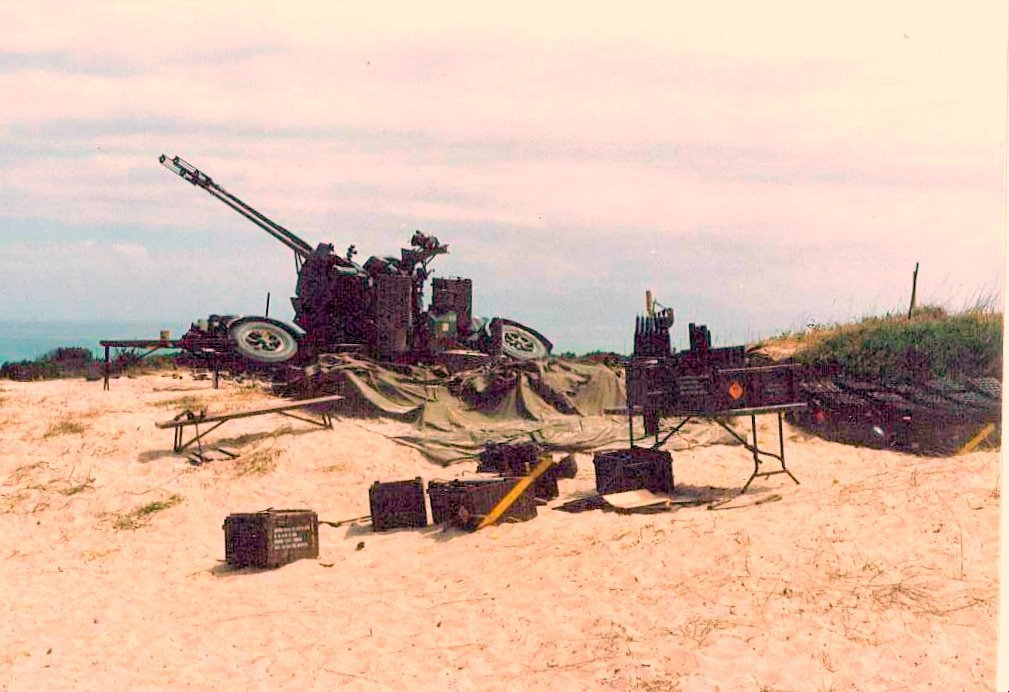
9 SANDF soldiers were killed in a training exercise in Lohatla this week. They were part of a 35mm Oerlikon Gun battery. I was a gun commander of a 35mm gun crew in Rundu in 1987. In those days there were also many accidents. The story in that the only "hit" anti aircraft has in many years was a SAAF chopper that was shot down by SADF anti aircraft at Oshakati. I dont know if anybody knows the detail of this story. .. Anyway I feel sorry for those soldiers at Lohatla.
Sunday, September 09, 2007
Saturday, July 21, 2007
Cuito Cuanavale Revisited
An interesting article by Piero Gleijeses was featured in the Mail and Gaurdian on 11 July 2007. The article was titled:Cuito Cuanavale Revisited
Saturday, June 30, 2007
The Famous Falklands War

When I was in Buenos Aires in 2003, I visited the Memorial to Argentinian conscripts and professional soldiers who lost their lives in the Falklands war . What interests me about this war, is the general media and public interest generated by the incident. (Or maybe more correctly, the media dis- interest in the Battle of Cuito Cuanavale and the Angolan war.) In many ways the Falklands War was a much smaller (and less strategically significant) story than the Battle of Cuito Cuanavale. 907 Soldiers died in the
At the time, the South African Military PR, tried to sell the battle as a success, history has shown however, that, in fact, this battle set in place a sequence of withdrawals and retreats for apartheid forces in Angola, Namibia and perhaps even South Africa!
This disinterest does not trouble me. I just find it curious!
Sunday, November 26, 2006
Metro FM Music Awards and other small things.
Last night Hlubi and I attended the Metro FM music awards here in PE. It’s a glamorous event that awards such titles as, best Kwaito Album, best singer, best Hip-Hop Group etc. It is a celebrity showcase where everybody who wants to make it in the entertainment industry wants to be seen. The event is young and black and very trendy.
I attended the function this year and last year and was really impressed, confused and amazed by this craze and frenzy for celebrity and anything “famous”. There were of course various live music and dance acts and there was great excitement in the air. Fun really… but as I watched those around me being brought to tears and screams because, Ntando, or Kabelo or “Teargas” just stood up or sat down or sipped their Coca Cola, I could not help to realise how difficult it was for me to be caught up in the general mania. I was enjoying myself, but I did not scream, I did not leap out of my chair waving my arms and shouting “I love you Mzekezeke” … Why not…. I began to wonder? Why do I not get excited? Why do I not get emotional? Is it perhaps something that comes from my army days, when we were trained to continue forward while grenades and live ammunition crack about your head. Not to get exited, not to freak out. Made not to show your pain, but to carry on. Shown how to stare bankly forward carrying the dead on your shoulder. Or perhaps it was more than that, My father conscripted into service in South Africa and Namibia in the early sixties, My father’s father a combatant in World War one, where he survived the battle of Delville Wood, my mother’s father served in North Africa, fighting Rommel in World War two…. Perhaps all of these contributing to a sterness, a militarisation of family culture, a suppression of emotion, a recessiveness. A militarisation that is perhaps not noticed growing up in white middle classes because everyone is very similar. But last night at the Metro FM awards those around me were from homes different to the one that I grew up in and they have no difficulty getting excited in the trivia, the small things of life, ….I suppose the things that make life beautiful!
I attended the function this year and last year and was really impressed, confused and amazed by this craze and frenzy for celebrity and anything “famous”. There were of course various live music and dance acts and there was great excitement in the air. Fun really… but as I watched those around me being brought to tears and screams because, Ntando, or Kabelo or “Teargas” just stood up or sat down or sipped their Coca Cola, I could not help to realise how difficult it was for me to be caught up in the general mania. I was enjoying myself, but I did not scream, I did not leap out of my chair waving my arms and shouting “I love you Mzekezeke” … Why not…. I began to wonder? Why do I not get excited? Why do I not get emotional? Is it perhaps something that comes from my army days, when we were trained to continue forward while grenades and live ammunition crack about your head. Not to get exited, not to freak out. Made not to show your pain, but to carry on. Shown how to stare bankly forward carrying the dead on your shoulder. Or perhaps it was more than that, My father conscripted into service in South Africa and Namibia in the early sixties, My father’s father a combatant in World War one, where he survived the battle of Delville Wood, my mother’s father served in North Africa, fighting Rommel in World War two…. Perhaps all of these contributing to a sterness, a militarisation of family culture, a suppression of emotion, a recessiveness. A militarisation that is perhaps not noticed growing up in white middle classes because everyone is very similar. But last night at the Metro FM awards those around me were from homes different to the one that I grew up in and they have no difficulty getting excited in the trivia, the small things of life, ….I suppose the things that make life beautiful!
Wednesday, November 01, 2006
Cuito or bust!

PW Botha died in his bed in Wildernis last night. He lived to the age of ripe old age of 90 and never stopped wagging his finger at people when talking to them. In his day he was a tough man, I am sure, he was not afraid to take on the world or the armed forces of the ANC, Mozambique and Angola…..which brings me back to Rundu in 1987!
The Angolan border with Namibia was a war zone in the eighties, and (I suppose like any other war zone) information available to combatants is restricted to a “need to know” basis. You do “need to know” that you have to wake up at six in the morning and polish your boots, you don’t “need to know” that the South African Defence Force has just launched a major land and air offensive deep into Angola where they will be thoroughly beaten by Angolan and Cuban forces at the
Anyway, we (some of us) sensed that something was happening by virtue of the fact that huge military convoys (taking a full day to pass by) were crossing over into Angola, the runway was piled with body bags as the Puma helicopters came back over the river to base. Mirage F1’s, Impala’s and Pumas’were “scrambling” two or three times a day and coming back all shot up and buggered. We were on “readiness state high”, sitting on the anti aircraft guns, generators running and ammo bins full. Yet in the middle of all this we are all loaded onto troop careers and brought into base and piled into a hall/hanger where we are told to wait for a “surprise”. We had of course, with time, become suspicious of surprises, like the “surprise” of litres and litres of (normally scarce) fresh milk they dish out to drink before forcing you to “leopardcrawl” kilometres through the dust and till you puke all over you’re your overalls.
So, we are sitting in the hot, sweaty hanger and eventually after a long wait we are presented by the Officer Commanding with the President of the Republic, PW Botha. Then we really new there was big shit going on! He spoke to us of how grateful the nation was for the great sacrifice we were making, and how right would persevere over wrong. I can’t remember exactly what he said, but I remember that, without him giving any details, that we were caught up in the middle of something serious and we were all going to die.
Only after returning back to South Africa and the passing of three months until January 1988, did the news eventually hit the newspapers that there had been a major “operation” in southern Angola (
Anyhow, that was the last time I was in the same room as PW Botha.
Tuesday, October 24, 2006
Are you on Drugs ek se?!
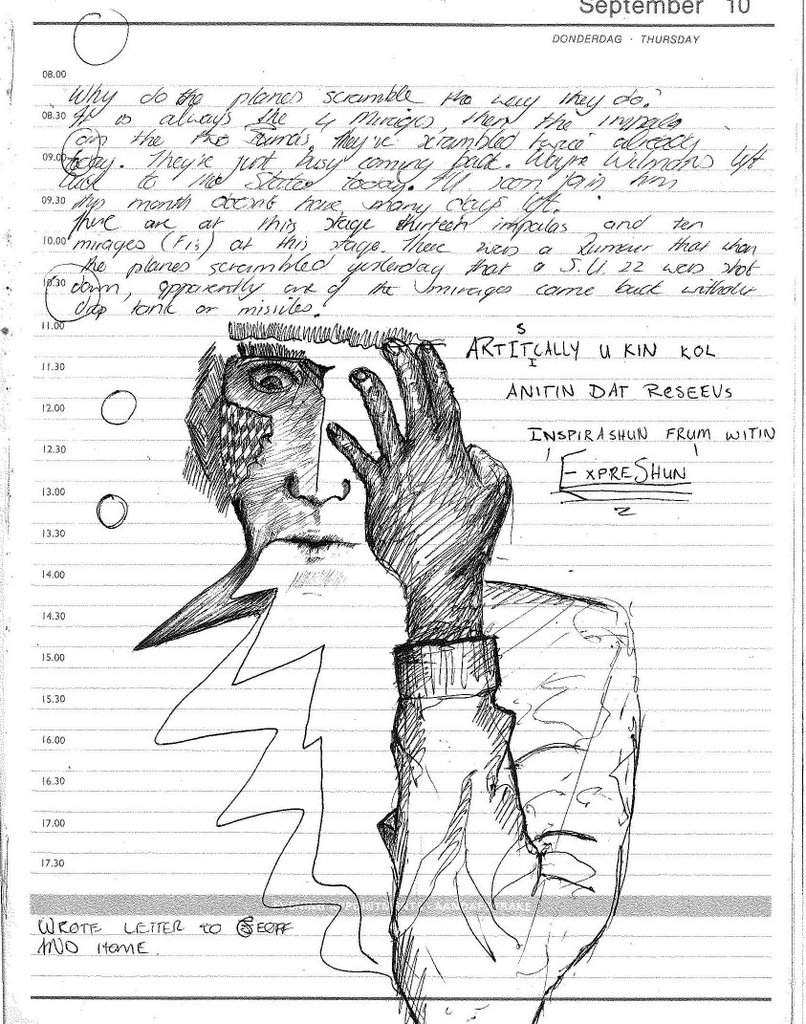
The response to this blog has been great. Thanks to everyone who is participating. I have seen that people are reading the blog from all parts of the world! So for those of you from Equador, or Egypt or Amsterdam or Austria, who are viewing "Sletroep" but may not be familiar with Afrikaans ( the de facto official language of the South African Defense Force in the 1980’s) the following translation may be useful:
The term “sleg troep” literally means “bad soldier”. Perhaps more rotten than bad because the inference was that one “sleg” soldier could contaminate an entire group. To be “sleg’ was more than just to be lacking in discipline; it was not conforming. It was not being part of the general group mentality that prevailed.
Behaviour that did not conform, or was not understood, would be attributed to that individual being either on drugs or a “voken Kommunis” or a “voken moffie”. By 1987 in the 10 Anti-Aircraft regiment, there didn’t seem to be much debate amoung the permanent force leadership (and their hangers on) that I was definitely a scary combination of all three these evils. The debate seemed more to revolve around which of my friends (by virtue of association with me) should be categorised as drug adicts, communists or gays .
I maybe brought it on myself by not integrating with those around me. I remember in Rundu, I was on a strange mission. For one, I had decided not to spend any money at all. I was there for three months and we would get a special “danger pay” for being on the border. Everyone used this money to go into the base ( about 10km drive though the bush) and buy beer and sweets and stuff. For me not spending was an exercise in discipline and stoicism.
I was studying two subjects through unisa at the time, so I spent a lot of time reading for my studies and reading other books I had brought along. I listened to reggae music and my mono speaker cassette recorder. I kept a journal and drew pictures in a notebook. This must have been very scary to those around me who were generally more interested in screaming at each other, slapping each other, stealing from each other and just generally being stupid.
I refused to eat meals with the rest of the people in the “section”. I should explain….As anti-aircraft artillery, our mission at Rundu was to defend the airbase from airborne assault. To do this a “battery” consisting of four “sections” was deployed in the bush around the runway. (One section at roughly each of the corners of the runway). Each “section” consisted of two 35 mm Oerlicon anti aircraft guns, connected by cable to a Radar. The radar would be at the centre of the section and the guns about 50 m away from it on each side. So the centre of the “section” was around the radar. This I where the section commander (normally a leutenant) had his tent. Each of the guns had a gun commander. I was a gun commander. An each gun commander would have a team of six or seven “gunners”. So to come back to the eating arrangements.. What would happen is that the section would converge for meals in a tent near the radar, metal trestle table were set out. Food would be driven in from the base in shiny steel warming canisters. ( there was a kitchen at the base) Eating this food would be a continuous shouting match, swearing and spiting and shoving. Completely crazy. I could not stand it!
I ate my food alone at my tent by the gun ramp.
Tuesday, October 17, 2006
The red star of the revolution is on Godwana’s door!
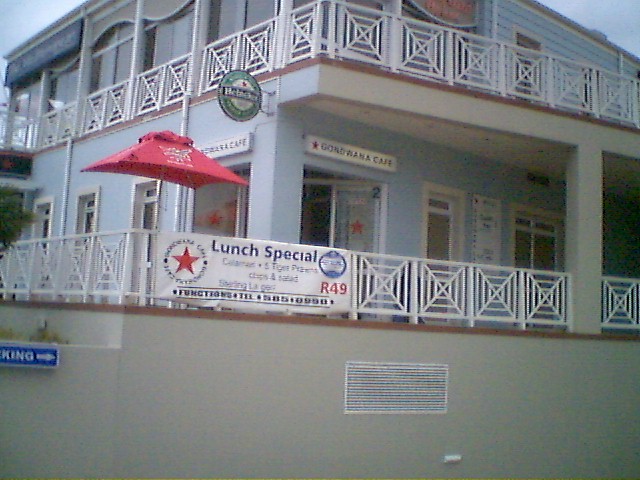
The red star of the revolution is on Godwana’s door. I don’t know who put it there or what they meant by it. But an eager jazz band plays there on the weekends. As I sat watching the crowd on Sunday, dancing, drinking, having fun and mixing freely I realised that this, in a way, was the society that I had dreamed of in the eighties.
Café Godwana is on the beachfront and Sunday evenings see a crowd of students, jazz lovers, black and white, young and old. Not self conscious or contrived but just comfortably enjoying the space and time together.
In Rundu (on the Angolan border in 1987) I knew that there was something wrong. I was intensely aware that we were in an abnormal situation, an abnormal and distorted society. I sensed clearly then that a new society would emerge, completely different and transformed. I remember thoughts like these playing through my mind,… but mostly then I remember being on a personal quest, brought about perhaps that I felt intensely different from those around me.
After arriving on the plane on that hot, bright white air strip, I came to find that we were in Rundu. We were driven on the back of a Samil 100 troop carrier away from the runway into the bush. Here we found our new home in the bush on the edge of the runway. Chopper tents, under camouflage nets around the 35mm Anti aircraft gun and radar system. Our mission… to protect the runway, the northern most airbase of the South African Defence force from Cuban Mig 23s and other Angolan military aircraft.
Intelligence reports had been received of “high level bombing” that would happen on the evening of the next full moon. Our defences were inadequate, so we spent the next week re-digging bunkers in the soft white sand. Repairing camouflage nets and building sandbag walls around our tents, around the guns around the radar. It was back breaking work, in hot weather, in a foreign country, in a war zone. But in this intense discomfort I came to one of the most significant realisations of my life. A truth that has come with me to this day. Walking up a steep “gun ramp” embankment with a sandbag on my back in the blazing sun; dirty with sand in my teeth, my ears, my hair…. I simply chose at that time not to be angry , frustrated or despondent. I chose at that moment and in that space to be happy. I knew on that day that I had stumbled on a great truth; the truth that happiness is a choice we make for ourselves, that happiness does not come out of circumstance, that happiness is not a product what we do or how we are treated, that happiness is a state of mind that we choose to claim for ourselves.
When the full moon evening came at the end of the week, the night was cool and clear. The "high level" bombers never came. We were not bombed… This too caused me great happiness!
Wednesday, October 04, 2006
Bad food on Robben Island
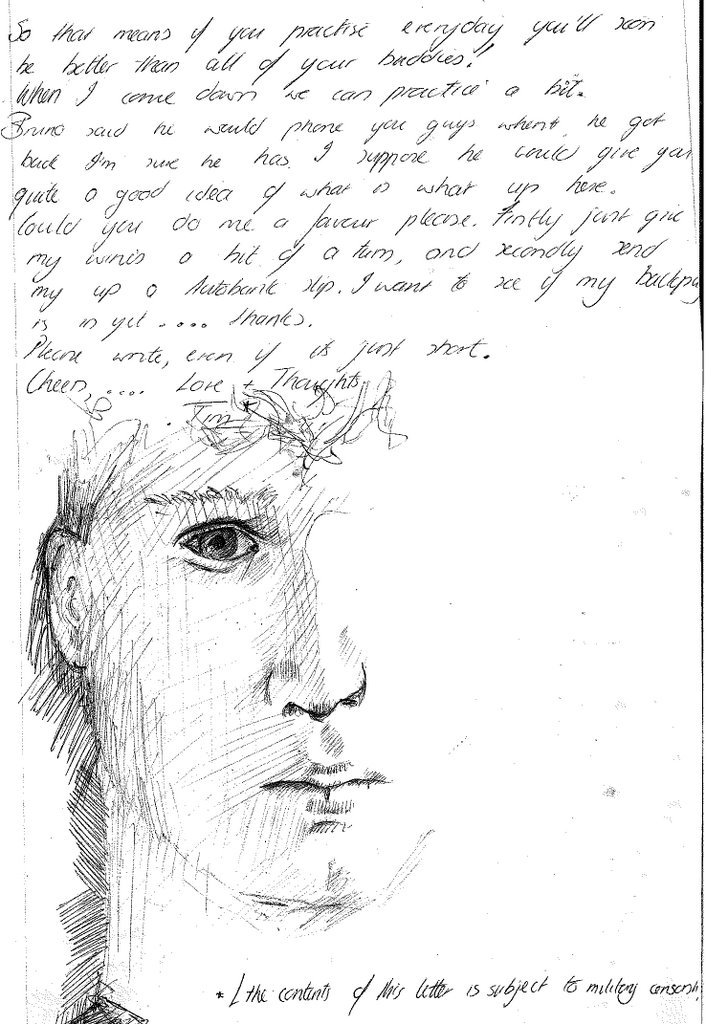
Hlubi and I attended a wedding of a over the weekend. The groom, a friend of ours, spent some time on Robben Island during the eighties after being convicted for offenses relating to his involvement in the then banned African National Congress. During the reception he an a number of speakers related their experiences of life on Robben Island. Things on the Island were difficult. Living arrangements, clothing "too big" or "to small", isolation from family and friends, bad food, forced labour, censored mail, sadistic handlers. Some spoke of the deep and lasting friendship that were formed. Freindships that have lasted to this day.
I came to wonder if the differences between their time on Robben Island and the uncomfortable time myself and others spent conscripted into the SADF were in fact all that great? We were “imprisoned”, kept behind four metre high fences with armed guards. We wore over sized overalls, ate bad food, carried out futile tasks......I only wondered about the similarities only for a short while and then realised that the Robben Island experience was of course much more severe. The torture and even death at the hands of the security police, years without ever being allowed to go home, even to bury a parent, lengthy sentences, no pass and no beer!
But it came to me that the in fact the significant difference between the experience of conscription and that of Robben Island, was that the Robben Island hardships can today be related openly as rivetting content of wedding reception speeches and stories. People speak with some pride of their hardships on Robben Island, audiences are spellbound, the stories are interesting, sad and funny (often all at the same time) Robben Islanders were imprisoned for their dedication to the ANC (or other liberation movements) they took selfless stand against the apartheid government, and for this they paid the price of imprisonment of Robben Island. When they speak of their experience, they speak from the moral high ground. They fought on the right side of history.
When last have you heard a white man in his thirties or forties speak publicly about his time in the army. It is almost a taboo. I for one have decided not to conceal my time in the SADF. I am sorry for it (for reasons I have explained before) but I have a story to tell and I insist on being heard. I, in my own way, was a victim of a brutal system. I did not suffer as much as those on Robben Island, I was on the wrong side of history, I know, but I am still pissed off about the whole thing. I am angry for those two years that were taken away from me, two years of wishing every day that it would all just end that I could go on with my life, two years of the most small minded, stupid, fascist, PF, dutchman, idiots in your face every day....two years....two years is a long time for a seventeen year old!
PS ..... I am illustrating these blogs with sketches I have found in letters and journals from 1986 and 1987 when I was in the SADF (mostly because I have very few photgraphs from that time)
Tuesday, September 19, 2006
Sometimes I dream of Rundu
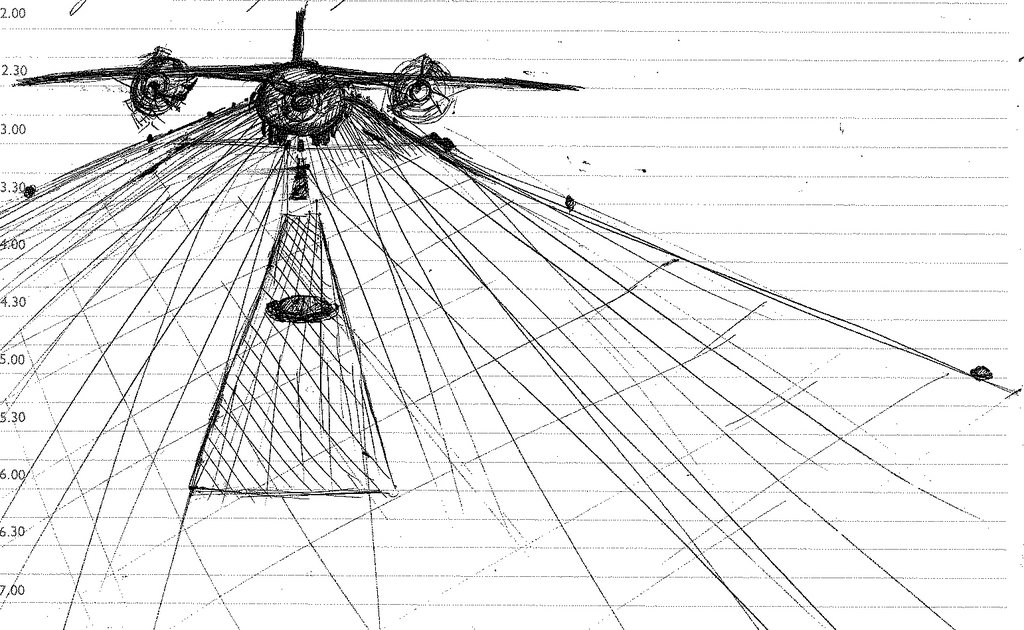
I dreamt about the army again on Friday night. Though it has been twenty years since I went in I, still have dreams about that time. They are not usually truamatic or stressfull. In earlier years there were dreams of being chased by men with guns. But more recently the dream is set in the present day, I am in the army again, and I cant seem to get the message across to those in control that I have already spent my two years and that it is some mistake that I am in the army again, but in the dream I am caught up in the daily things of a conscript and have resigned myself to just waiting out the term....
I have these dreams without having experienced any major trauma or having comitted (personally) any violent acts, but what about those with blood on their hands, or those that saw thier friends die? What kind of dreams are they having at night?
I think it is important to say at this point that though I am apologising for my time in the army in 1986 and 1987, that I dont have any gory details to share, I never shot anyone, beat anyone, I never saw anyone get shot or anyone getting beaten. I was, though, part of a machine that did kill mame, bomb, poison and throw bodies out of aeroplanes! I was just fortunate not to be at the killing end of that machine. I wrote this piece below in 1993 some time after I came out, clearly some stuff still bugging me.
I killed no man
.....so why then these tears ?
Why do I regret that time ?
...why is it stained on my mind....ingrained ?
when I was not shot nor stabbed,
never starved nor overcome by cold,
nor felt bright Napalm burn my skin,
hot shrapnel rip through my throat;
or my blood brother's head burst beside me;
hair, bone, brain spill and splat on my face,
my rifle, my boots....
...And me crying, sobbing,
cowering, clasping, crawling
in that dust ?
I did come pretty close to the war at the end of 1987, when I spent three months on the Agolan border at a base near a Namibian town called Rundu. We were flown up to Rundu from Cape Town in a troup carrier. It was the first time I had flown in a plane. We boarded a c130 at Wingfield on a cold and rainy August day. We flew at altitiude. The c130 is not presurised, so it is noisy inside and very cold, you sit in straps that form a hammock of sorts that hangs from the wall of the plane, icicles form against the metal inside the plane. Eveyone is sitting huddled together, kit on the floor, some afraid, some confused, some throwing up into paper bags.
What is important to explain here is that none of us really new where we were going on that day. We had been told some weeks before to pack our kit and be ready to leave at short notice, and that we would be going into the "operational area" for an unspecified time. (I realise now that the secrecy had to do with intelligence protocols, but no one at the time explains) Then after weeks of rumours and expecting to leave at any momement, the trucks arrive and we are all tumbled off to the airfield.. even the mode of transport is kept secret... we could have gone by train or truck, they never told us that we would fly. The secrecy ofcourse breads a network of rumours, everybody has a brother or an uncle that has told them where we are going, how long we would be there for and what our mission would be.... these rumours are rife and conflicting, you choose to believe what you will, but normally you have a reasonable idea of what is going on.
Eventually we land, very bumby. We come to a standstill, it is dark inside the plane, we clutch our rifles in our hands, a whisper goes around the plane that we have landed in Rundu, (others say we are in Grootfontein) but we dont know if this is good or bad. We have heard the names of these bases in stories told to us... Rundu, Oshakati, Grootfontein, Kutimo Molilo. The rear rampdoor opens and a white searing heat enters the plane. As we scurry out of the plane, we dont know if we are about to be shot at or attacked we look around nervously, checking to see if we should take cover, run or shoot! Everything is scorched intensly white, incredible bright light out of the darkness of the plane, slowly we see that we are on a runway, in a large military base, fuel storage, bunkers tents, offices and streets. it all seems reasonably safe......
Wednesday, September 13, 2006
Hi Tim .
Hi Tim .
Thanks for the mail ; it is an interesting and courageous idea .
The T.R.C. Hearings were initially what got me thinking about my time in the S.A.D.F. , but at first my reaction to my own conscience was a self-imposed deniall . Excuses such as how young and naive I was , about whether I had a choice or not , the limit of my involvement , etc. all seemed fairly relevant at the time . Eventually ,
though , I had to admit to myself that I had been on the side of wrong ; I had played an active part in a terrible wrong-doing . By being in the army , I supported apartheid . This I regret , immensely .
James Cranke
Tuesday, September 12, 2006
Plucked from my mother's breast.
Thanks to all those who responded so positively to the idea of this email and the slegtroep website. It is very encouraging and it seems that the time is right to talk about this part of our History. My story will come in parts perhaps not Chronological but as I remember them.... I hope that this email and the website will not only be my story but the stories of others as well, but if it is only mine thats also OK. My story starts like this......
I received my call up in 1985 while I was in standard 10 at Fairmont High School in Durbanville. My call up was to 10 Anti Aircraft regiment, Youngsfield, Cape Town. At that stage I felt that my options were limited. My family was not in a position to send me to Varsity (delaying the onset of national service). Neither did I believe that I was able to leave the country. I did know at this stage that I was facing a moral dilemma. I knew that by reporting for duty on the specified date that I would be supporting a government and a system that I had come to know was wrong. I did however not have the courage or the conviction to become a conscientious objector and face the six years in prison. Here I must pause to that those that tried to caution me about what I was about to do:
Ben van Staaden
Jo Tyers
Barbara Rowe
Edna Fourie
I remember these voices, and their appeals to me; but, feeling trapped, I reported for duty.
It was a terribly sad day. My mother drove me to the camp. I had a lump in my throat and could hardly hold back the tears. I was left there that day with hundreds of others. I was seventeen years old, but there were some that were younger.
The first week was chaos, Medical examinations, queues for tests, forms to be filled in, kit to be received and then the haircut; down to bare bristles. We were allocated into bungalows. Our lives were controlled by bombardiers ( corporals) mainly conscripts themselves, and generally from the previous year's intake. The treatment received at the hands of our superiors was terrible. From the first moment. Those in control of us were driven by some perverse sadism. A desire to exact pain and suffering, and competing with each other to show who could cause the most suffering among the recruits under their control. The were not allowed to physically beat us and mostly kept to that rule. When the did beat us they new they were doing wrong. They inflicted pain through forced physical exercise, sleep deprivation and psychological abuse.
By the second week we had officially entered the three month period of "basic training". We wore brown overalls, boots and a plastic helmet inner called a "doibie". We went everywhere with our R4 rifles. We spent a month in the bush near cape point, we slept with our rifles in out sleeping bags. There we slept on the ground under our ground sheets; two to a "bivie". I shared a "Bivie" with a guy called Jason Dresser from Kwazulu-Natal.
The focus of our training was drill, physical training, musketry and fieldcraft, but the undercurrent was always one of fear, confusion. I excelled at most of the tasks and exercises, map reading, rifle assembly and target shooting. I was surrounded for the first time in my life with people who were not from my background. Many had not finished school. Most were afrikaans speaking, some farmers, some apprentice train drivers. Some criminals and drug addicts. I had opted as some form of protest not to collaborate with the system while within its belly. (too late!) I opted not to enrol on the Junior Leadership course. I was therefore doing my basics with very ordinary foot soldiers who lacked the ambition, fitness or the schooling to qualify for entering the Junior Leadership School that trained junior commissioned and non-commissioned officers. (standard 10 was one of the minimum requirements of the course) I spent my three months basic traing with this collection of fine individuals was known as the "Battery". The group of about two hundred was under the control of a major with white hair whose name I cant remember. But our day to day dealings were with a tubby Sergeant Major, black hair, black moustache, vicious, but lacking the severe sadism of some of his underlings.
Our platoon was fortunate to have Clinton Berry as a Bombardier. A lot more civilised than most in control. Bombardier berry was only a year older than me. Younger than some of the guys, but his power was absolute. If the bombardier said sit, you all sat immediately, if he said run you ran immediately. Insubordination was not tolerated at all. When the Bombardier spoke to you, you stood to attention looking straight forward, no expression on your face, arms clipped into your sides, chest out. Many who have not experienced Military training cannot understand how the power of over the trainees can be so absolute. It is absolute. If you are ordered to stand to attention in the blazing sum you will do so. You will rather loose consciousness than disobey the order. I remember a day on an asphalt parade ground. It was hot and we had been drilling for some time. (Marching and moving in formation). We were standing to attention, rigid, eyes forward, chest out. The troop to my left swaggers, sways and falls face down on the tarmac. I remember the cracking sound as his face hit the ground and I remember the view from the corner of my eye of the blood and teeth that lay on the ashphalt as the medics dragged him off...I don't remember his name. it didn't seem significant at the time....
Monday, September 04, 2006
Talk about it!

Some time earlier this year Archbishop Desmond Tutu made a statement about white south africans not having responded adequately to the generosity of black forgiveness for South Africa's apartheid past. He spoke of the fact that there was no mass apology from white south africans, no outpouring of remorse or regret.
I gave this some thought for a while. At first I thought to myself, "lets get over it" why is this man going on about this thing. Then later I thought that perhaps he is right. There is a need for an apology and an acknowledgment of wrong doing.... But how? Through what mechanism? Then I thought let me not bother about the great "mass" of white South Africans. Let me concern myself rather with my own experience and history. Let me make my "full disclosure"; but let me do it in such a way that others may join me if they see fit.
An so this little blog is born. Anyone can post a message here. You are free to "subscribe" so you can receive by email the contributions that may be made to this blog as and when they are made.
So here goes my story....
What troubles my conscience is the time I spent in the South Africa Defence Force from January 1986 to December 1987.
The country was going through great difficulty at that time and the South African Defence Force was a significant piece of state apparatus used to perpetuate and deepen apartheid rule. If the South Africa Defence Force did not exist; apartheid would not have survived as long as it did. South Africa would have been driven out of Angola and Namibia much earlier or would not have been able to establish a presence there in the first place. The ANC and other liberation groups would have organised with far greater freedom in Lesotha, Botswana, Zimbabwe, Mozambique and Swaziland. If the South African Defense force did not exist, the State's of emergencies declared in the eighties would not have restarded the mass mobilisation of ordinary people in the towns and cities to the extent that it did.
In short; the South African Defence Force prolonged and expanded the suffering of Millions of South Africans. If the SADF did not exist that suffering would have been less, and if people like me did not serve time in the SADF then it, in itself, would not have existed nor been in a position to cause the suffering it did. And therein lies my culpability. I served in the SADF. I gave of my time. I was trained and went into active service inside and outside the borders of the Republic of South Africa. For this I seek forgiveness.
I can of course not expect forgiveness from anyone if I don't supply the full details of the actions that I would like to see forgiven. I will set them out as best remember them in the blogs that follow. I encourage you to contribute your thoughts, memories, disclosures (and photos) they will be displayed immediatly for the world to see at www.slegtroep.blogspot.com.
Send this email to others who you know will find it intersting or useful.
Subscribe to:
Posts (Atom)